Prologue
What this site is — and why
"AKTE EFFZEH" is for lovers and haters of the FC alike. History becomes legend, legend becomes myth. And myth becomes cult — or a reason for eternal second-hand embarrassment, depending on the event.
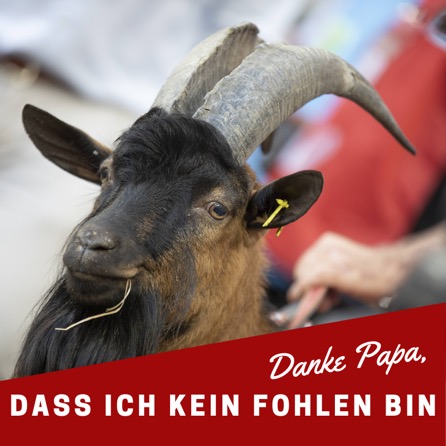
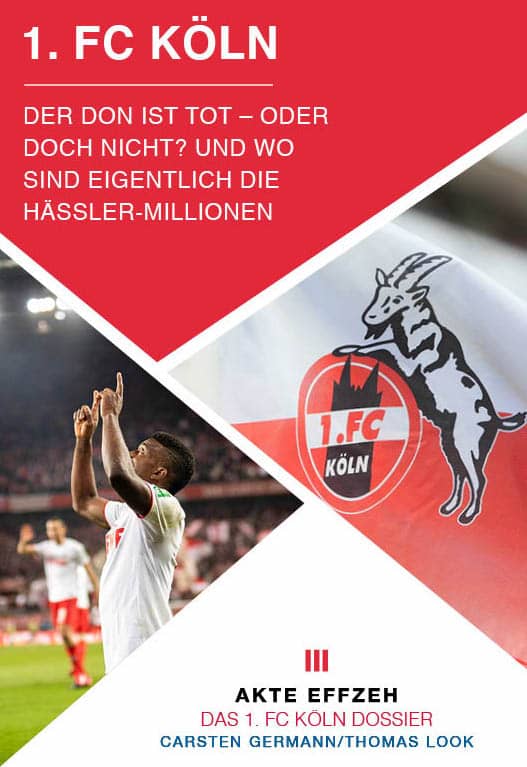
The Don is dead — or is he? And where exactly are the Häßler millions? 1. FC Köln is the club of eternal hope and eternal disappointment. Three-time German champions, yet the ultimate yo-yo club. Hennes the billy goat is a cult icon, the Südkurve sings "Mir stonn zo dir, FC Kölle" — and at the end of the season, they go down again. Cologne lifestyle meets sporting drama.
But this site goes beyond mere celebration or hatred. Akte Effzeh is structured in three parts: The Club Dossier tells the story — triumphs, tragedies, scandals, heroes and failures across 12 chapters. Match Intelligence delivers the live data a professional needs: squad, statistics, head-to-head, injuries, form. And Predictions brings it all together — with prediction markets.
Prediction markets are not gambling. In traditional sports betting, the masses lose — the money goes to the bookmaker who has built in his margin. Betting exchanges are similar: commissions on winnings, liquidity shortages and spread eat into returns. Prediction markets work fundamentally differently. There is no bookmaker who lets the house win. Instead, money flows from those who don't know to those who get it right — with risk management, portfolio diversification and disciplined capital deployment. You can trade 24/7, build and close positions, and wait for the binary resolution of the event. Those who understand it are not speculating — they're engaged in systematic trading.
Akte Effzeh is part of Akte Bundesliga — the same concept for all 18 Bundesliga clubs. Each club gets its own dossier, its own intelligence, its own predictions. The big picture can be found at aktebundesliga.net.
Profile
Facts, figures and milestones
Steckbrief – Facts, figures and milestones
1. FC Köln (full name: 1. Fußball-Club Köln 01/07 e. V.) was founded on February 13, 1948 through the merger of two football clubs, Kölner BC 01 and SpVgg. Sülz 07.
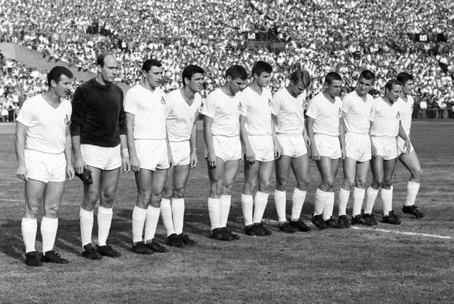
The "Effzeh" is the largest sports club in Cologne with more than 110,000 members (as of December 2019) and the sixth-largest in Germany. A founding member of the Bundesliga, the club were crowned the first-ever German champions in the new Bundesliga era in the 1963/64 inaugural season and remained in the top flight uninterrupted for 35 years until 1998.
Since March 6, 2002, the professional football division (first team, U21, U19 and U17) has been spun off into 1. FC Köln GmbH & Co. KGaA. The registered association holds 100 per cent of the share capital (€2.5 million) in the KGaA and is the sole shareholder of the fully liable general partner, 1. FC Köln Verwaltungs-GmbH.
1. FC Köln occupy eighth place in the Bundesliga all-time table (as of December 2019) and third place in the all-time Oberliga West table, the top division for west German clubs before the Bundesliga was introduced.
1. FC Köln's home ground is the RheinEnergieStadion in the Müngersdorf district, which holds 50,000 spectators and was completely rebuilt from December 2001 ahead of the 2006 FIFA World Cup in Germany.
Good to Know
What few people know
Over five decades in the Bundesliga, 1. FC Köln have repeatedly made headlines through power struggles in the boardroom. Cologne-style cronyism, intrigue and backstabbing "at their best" are part of the club's DNA — a footballing Westeros with a Game of Thrones attitude.
No president held office longer than the "Boss" — Franz Kremer. He led the club for 20 years from 1948 until his sudden death in 1967 — the most successful era in club history. That is well known in Cologne fan circles. Less well known is that Kremer (quote: "Do you want to become German champions with me?") was notoriously heavy-handed, interfering with team selection and falling out with coaches.
The Boss, Franz Kremer, insisted on having his say. Autocratic and convinced of his own infallibility, he wanted to influence squad composition and team selection. Hennes Weisweiler, unable to implement his vision, left in frustration — first to Viktoria Köln on the right bank of the Rhine. When he failed to break the dominance of 1. FC Köln there, Weisweiler moved to Borussia Mönchengladbach, where he built a dynasty that would torment the Effzeh for years.
1. FC Köln's last major title came in the 1977/78 season. Under Hennes Weisweiler, the Cathedral City club won the Double of championship and cup. Borussia Mönchengladbach's 12-0 win over Borussia Dortmund under coach Udo Lattek was not enough. Every FC fan knows this story. What few know: without one of Weisweiler's greatest defeats — his departure from Cologne in the early 1960s — the Double would never have happened.
For the Haters
Embarrassing disasters and major defeats
1-8 against Dundee: In European competition, a 1-8 thrashing by Scottish side FC Dundee in the very first FC match in the European Cup in 1962/63 remains the most painful memory. A humiliation on the continental stage.
Heaviest Bundesliga defeat: 1. FC Köln were hammered 0-7 at FC Bayern München at the Grünwalder Straße stadium on May 15, 1971 — the worst league defeat in club history.
The most embarrassing turnaround against 1. FC Köln: In the Bundesliga match against SC Freiburg on December 10, 2017, Köln led 2-0 deep into the second half — only to lose 2-3. A collapse that became a symbol for the club's fragility.
The goalless record: Not even the biggest Bundesliga laughing stock Tasmania Berlin managed this. In the 2001/02 season, the Effzeh went 18 consecutive league matches without a win — drawing seven and losing eleven. A negative record even by Köln's standards.
Downfall in the UEFA Cup final: 1. FC Köln reached eight European semi-finals, but only in 1986 did they make it to a final — the UEFA Cup against Real Madrid. After a 2-5 aggregate defeat, the dream of a European title was shattered.
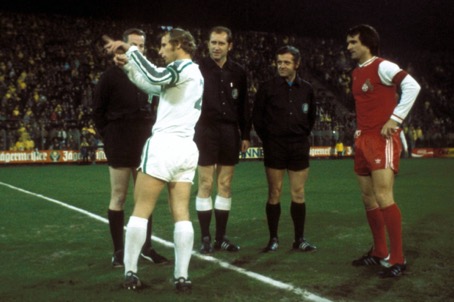
Black smoke for the relegated side: Rarely has a club bid farewell to the Bundesliga as disgracefully as 1. FC Köln on May 16, 1998. After the 0-2 defeat against VfL Bochum, which sealed their first-ever relegation, thousands of fans rioted, hurling flares and smoke bombs onto the pitch.
1-5 against Borussia Mönchengladbach: The worst derby defeat against Gladbach came on November 14, 1984. In a devastating night, the arch-rivals dismantled Köln in their own backyard.
Bundesliga record against Mönchengladbach: Losing derbies is never good. Consistently losing derbies against the "arch enemy" is worse. Köln's overall Bundesliga record against Gladbach leans uncomfortably in the neighbours' favour.
The most delightful season from a Geissbock-hater's perspective came in 2017/18. From the Europa League straight to relegation — the carnival club managed to crash from European competition to the 2. Bundesliga in a single, catastrophic season.
For the Lovers
Key triumphs and major victories
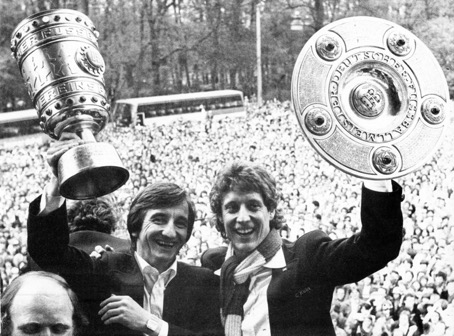
DFB-Pokal winners: The Rhineland institution won the DFB-Pokal four times: 1968, 1977, 1978 and 1983.
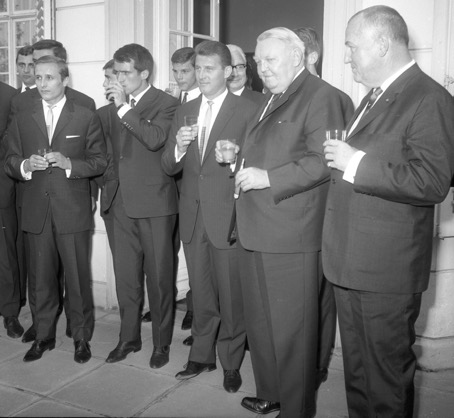
First Bundesliga champions: 1. FC Köln were crowned the first-ever champions of the newly founded Bundesliga in 1964.
70 points: 70 points from the championship season 1977/78 (converted to the three-point rule) represent 1. FC Köln's best-ever haul in a single Bundesliga campaign.
UEFA Cup: On the international stage, the "Effzeh" reached eight European semi-finals in total, including twice in the UEFA Cup — in 1979/80 and 1985/86.
1. FC Köln's greatest success came in 1977/78 with the "Double" of German championship and DFB-Pokal under legendary coach Hennes Weisweiler.
Star turn against Belgrade: One of the most furious fightbacks in European cup history came on December 6, 1990. Trailing 0-2 on aggregate against Red Star Belgrade, Köln stormed back to win 3-0 on the night — a legendary evening under the Müngersdorf floodlights.
Bayer champions? Not on Köln's watch! Matchday 33 of the 1996/97 season. In the Rhineland derby against Bayer Leverkusen, FC had the chance to deny their neighbours the title — and took it with relish, winning to ensure Leverkusen's championship dream was crushed once again.
FC 10 – FK Pirmasens 0: The biggest win in a league match came against the then south-west powerhouse FK Pirmasens — a 10-0 thrashing that remains a club record.
European success after 25 years: All of Cologne waited a quarter of a century for this — a victory in a European cup match. When it finally came, the relief and joy were unbounded.
Most Important Persons
The men who shaped the club
2017) — "De Knoll": He is the greatest player in 1. FC Köln's pre-Bundesliga era. A "Hero of Bern" and the only player from the 1954 World Cup-winning squad to become German champion in the Bundesliga. At the end of the 1963/64 season, Hans Schäfer retired as the first Köln icon of the new era…
The "Rastelli": One of the most brilliant midfield playmakers of his time. His rivalry with Gladbach's Günter Netzer was legendary. Overath won the battle at the 1974 home World Cup, playing in the final against Holland (2-1), while Netzer did not. As an FC player, he was a one-club man and all-time great…
1983) — The "Don": No other FC coach was as successful as "Don" Hennes Weisweiler. With the cup victory in 1977 and the "Double" in 1978, "Don Hennes" shaped the last truly successful era in the club's history, when Köln were among the German and European elite. His lovably gruff manner is missed to this day…
"The Prince": Köln fans would probably have forgiven him even a move to Gladbach or Leverkusen. No other player achieved such popularity at the FC after 1993 and Pierre Littbarski's departure as Lukas Podolski. The boy from Bergheim conquered the city with his infectious grin and thunderous left foot…
The dribbler: Pierre Littbarski moved from Hertha Zehlendorf to Köln in the summer of 1978 for 13,000 Deutsche Mark. He dropped his trainee position in the tax office and competed with Roger van Gool for the right-wing spot under coach Hennes Weisweiler. Littbarski won the battle and became one of the most skilful German players of the 1980s…
Trouble from the start: Bernd Schuster transferred from FC Augsburg to 1. FC Köln in 1978, having already signed a contract with Borussia Mönchengladbach. After 61 Bundesliga appearances and ten goals for Köln, "the blond angel" moved to FC Barcelona in Spain in the summer of 1980 — leaving a trail of controversy behind…
Personae Non Gratae
The men fans love to hate
The "Capitano": But in Köln, very much "not one of us." The midfielder was synonymous with Bayer Leverkusen's rise between 1999 and 2002. After a 2-0 home win by Leverkusen against Schalke 04 in March 2011, Ballack fell from grace in Köln when he celebrated on the fan fence — a gesture the Effzeh faithful never forgave…
Given away to Fürth: Austrians usually feel quite at home in the Cathedral City — think of FC legend Toni Polster or coach Peter Stöger. But one Alpine professional did not: Ralph Hasenüttl. That the man from Graz led the FC to their first Bundesliga return in 2000 is a footnote few remember today…
The hand: From Köln's perspective, the hand of Schalke midfielder Oliver Held is still to blame for the club's first-ever relegation. On April 29, 1998, the relegation-threatened Cathedral City side had the big chance to gain breathing room — but Held's controversial handball went unpenalised, sealing Köln's fate…
Tragic
Those who suffered misfortune
Heinz Flohe — The conductor: Heinz "Flocke" Flohe was a member of the 1974 World Cup-winning German squad. Flohe died on June 15, 2013 at the age of 65 after years of suffering from the effects of a severe car accident. The elegant midfielder, who played for 1. FC Köln from 1966 to 1979, was considered one of the finest playmakers of his generation. His fate touched all of football Germany.
Gerhard Welz — The thwarted world champion: Gerhard Welz was on track to become Sepp Maier's understudy at the 1974 World Cup in Germany when a catastrophic knee injury ended his dreams. The Köln goalkeeper never recovered and his promising career was cut brutally short.
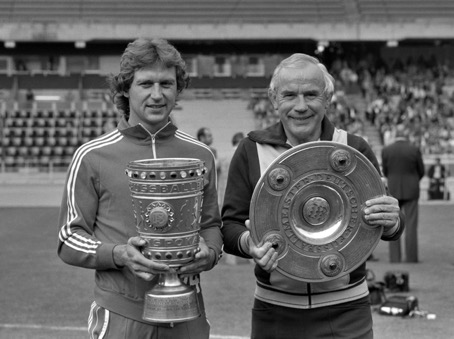
OMG — Oh My God
You can't be serious
Hollywood-ready: A "boxer" named Christoph Daum, "The Don is dead" and a spot of scandal money for the national goalkeeper.
"Cassius" — that is what the Cologne tabloids christened the brash, carefree FC coach who shook up German football in 1989 from its slumber. Christoph Daum, combative and confrontational, turned Köln into genuine title contenders — only for the dream to explode in spectacular fashion.
Daum vs. Hoeneß — The legendary TV duel: ZDF viewers held their breath on May 20, 1989. Just before the direct Bundesliga clash between Köln and Bayern, coaches Christoph Daum and Uli Hoeneß tore into each other live on air — one of the most explosive confrontations in German football television history.
The Bundesliga scandal: The 1970/71 match-fixing scandal is commonly associated with Schalke 04, Hertha BSC, Kickers Offenbach and Arminia Bielefeld. But 1. FC Köln were also deeply entangled in the affair, with multiple matches involving corrupt players and officials.
May 5, 1971 (rescheduled matchday 24): 1. FC Köln – Rot-Weiss Essen 3-2. Offenbach president Horst-Gregorio Canellas bribed Köln goalkeeper Manfred Manglitz with 2,500 Deutschmarks to throw the match. Manglitz took the money but did not throw the game — Köln won 3-2.
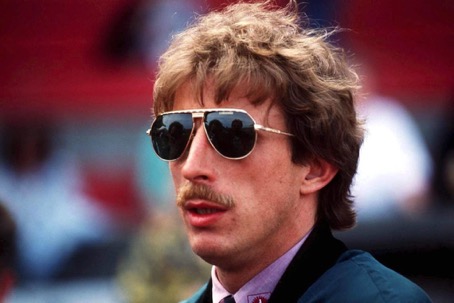
May 22, 1971 (matchday 32): 1. FC Köln – Rot-Weiß Oberhausen 2-4. Again Manglitz was bribed, this time by Oberhausen president Werner Altegoer. This time the keeper allegedly let four goals in. The DFB later banned Manglitz for life.
June 5, 1971 (matchday 34): 1. FC Köln – Kickers Offenbach 4-2. Once again Canellas approached Köln keeper Manglitz about a favour after the match. But by then the whole affair was about to unravel.
"Toni" and the kick-off: "It's always the same" — with this rather unremarkable sentence began perhaps the greatest scandal interview in German football history. In November 1991, the revelations around "Don" Toni Schumacher and the murky financial dealings at the FC shook the club to its core.
Back to square one: Köln and their coaches — a chapter in itself! On April 27, 2019, the "Effzeh" sacked Cologne-born coach Markus Anfang — continuing a revolving-door tradition that has seen the club burn through managers at a staggering rate.
Fun Facts
Knowledge for blowhards, braggadocios and connoisseurs
The FC as 1978 "Double" winners and "carnival club" — you don't need to be a football insider and you don't need to be from Cologne to know that. Less well known are these facts.
Mascot "Hennes": The billy goat "Hennes" is, alongside Frankfurt's eagle "Attila," the only live mascot in the Bundesliga as of December 2019. The first Hennes was presented to the club in 1950 by a circus director. The current incumbent is Hennes IX.
Müller scores six: FC marksman Dieter Müller was, on August 17, 1977 in the 7-2 win over Werder Bremen, the first and to date only player to score six goals in a single Bundesliga match.
First ground closure: The FC are not only the first Bundesliga champions — they also earned the less glorious distinction of the first-ever ground closure in the inaugural 1963/64 season, following crowd trouble at Müngersdorf.
The manager plays himself: On February 24, 1973, the madcap club produced another first. Due to personnel shortages, general manager Karl-Heinz Thielen had to register himself as a player and take to the field — a truly Cologne moment.
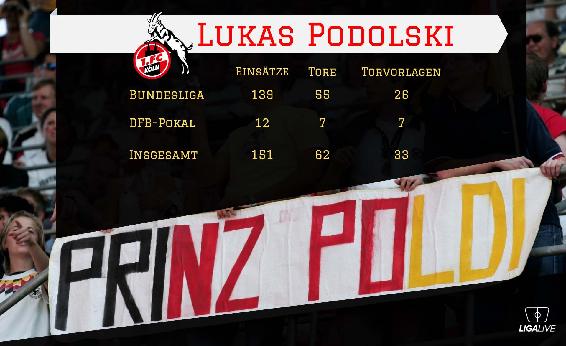
The election of Werner Wolf in September 2019 was emotional: The new FC president refused to continue working with club legend Harald "Toni" Schumacher, who had served as vice-president. The split laid bare the ongoing power struggles within the club.
Christoph Daum: Under the direction of Dietmar Artzinger-Bolten, the FC hired the previously unknown coach Christoph Daum in 1986. Within three years, Daum transformed the club into genuine title contenders, bringing an intensity and flair that electrified the Bundesliga.
Albert Caspers: Albert Caspers entered FC history in 1998 as the president who had to take responsibility for the first-ever relegation. After the drop, Caspers resigned — but the damage was done.
The first million-mark transfer: With the Belgian Roger van Gool from FC Brugge, 1. FC Köln completed the Bundesliga's first-ever transfer exceeding one million Deutschmarks in 1976 — a landmark deal that signalled a new era in German football economics.
Special Moments
Tod eines Torjägers
Sunday, November 17, 1991. At the 1. FC Köln training ground, coach Jörg Berger asks his players to do only a light jog after the 0-3 thrashing at FC Schalke 04. The idea is to clear their heads somehow. It doesn't work. A police officer appears unannounced. His question — whether the player Maurice Banach (24) had turned up for training today — Berger has to answer in the negative. "He has probably been killed in an accident," the officer tells the stunned coach. According to police, Banach died in the early hours after his car left the road.
Maurice Banach — his death shook not just Cologne but all of German football. That Köln could not play their next match against Dynamo Dresden and had to cancel was a given in those bleak autumn days of 1991. At the Belgium–Germany international (0-1) a few days later, a minute's silence was observed for Banach. German football had lost one of its brightest hopes — a player on the verge of international call-up, whom all observers credited with a glittering future.
And a goal machine. Signed from 2. Bundesliga promoted side SG Wattenscheid 09 in the summer of 1990, "Mucki" — as they had called the 1.88-metre striker since his days in Münster — made an immediate impact in Cologne. "Our great hope," Jörg Berger later recalled, "wasn't Pierre Littbarski or Horst Heldt — it was Mucki Banach." The man who had fired Wattenscheid into the Bundesliga with 22 goals and won the 2. Liga golden boot was back in Germany's elite.
Before his fatal accident, which was never fully explained, Banach scored ten goals in 18 league appearances in the marathon 1991/92 season. Many 1. FC Köln observers still believe that with Maurice Banach, a permanent place in the top five — perhaps even a third German championship after 1964 and 1978 — would have been within reach. His death put a sudden end to those hopes. In 1989 and 1990, Köln had narrowly missed the title as runners-up. So it remained a dream.
That the two goals in the 4-1 win against Fortuna Düsseldorf on November 9, 1991 would be the last of Maurice Banach's life, nobody in Müngersdorf knew at the time. A week later, Banach stayed in his hometown Münster after the away match at Schalke 04 — a stay that would later fuel speculation. Reports that he had been driving drunk after attending a carnival event turned out to be false. Nevertheless, the circumstances of the crash were never fully clarified.
It is precisely these details that have contributed to Banach becoming a myth in Cologne — an eternal fan favourite. More than 25 years after his death, Maurice Banach — who as the son of an African-American US soldier and a German mother surely never had it easy in deeply Catholic Münster — remains unforgotten in the Cathedral City. Videos of his most spectacular goals still circulate regularly in FC forums, and posters commemorated the player who died far too young on the 25th anniversary of his death.
While life in the Bundesliga went on, the FC did not play again until 14 days after the tragedy. Candles in the FC fan section and countless banners reading "Only those who are forgotten are truly dead. We will NEVER forget you, Mucki" filled the Müngersdorf stadium. At the dutiful 1-0 win over VfL Bochum, any goal celebration was out of the question. Cologne stood together — "Echte Fründe stonn zesamme" — the famous line from the De Höhner song was more than just lip service that day.
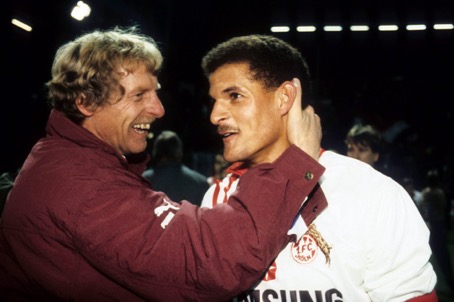
Wise Words
Quotes for eternity
"The atmosphere in the Cologne stadium is always fantastic. Really, the only thing that spoils it is the team."
Udo Lattek„Am besten ist, Flugzeug stürzt ab."
Trainer Tschik Cajkovski vor dem Rückflug nach dem 1:8 bei Dundee United am 5. 9. 1962"I don't want to be a monument — pigeons only shit on those."
Anton "Toni" Polster of 1. FC Köln, when asked whether he was already a monument in Cologne"This stumbling king is the ultimate punishment for any teammate."
Bernd Schuster as 1. FC Köln coach, on his player Holger Gaißmayer"The first goal is to sell the biggest duds. If there's still a deposit on them, great. If not, that's fine too."
Karl-Heinz Thielen as vice-president of 1. FC Köln